
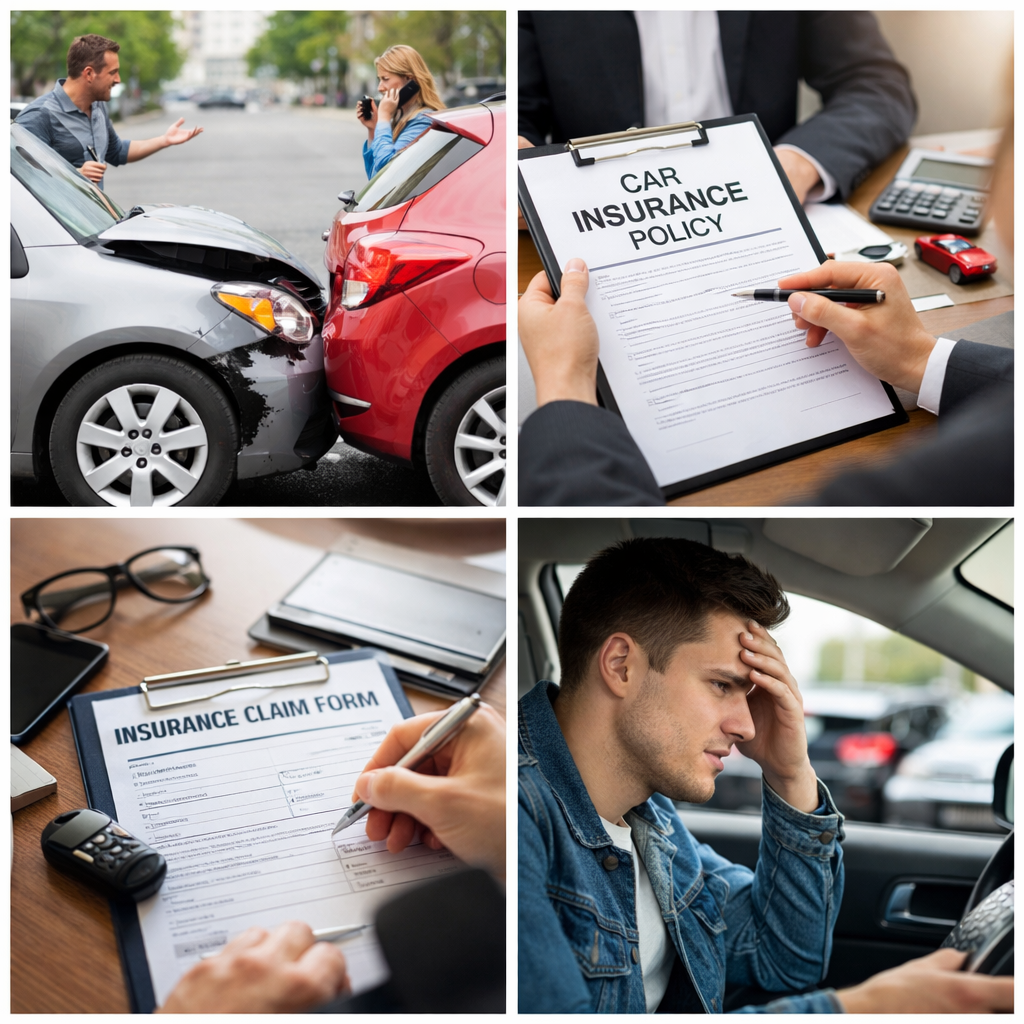
Car accidents happen — even to careful drivers. A small mistake at an intersection or a minor rear-end collision can lead to more than just repair costs. In many cases, your car insurance premium increases after an at-fault accident. That’s where accident forgiveness comes in.
But is accident forgiveness really worth paying for? Or is it just another add-on that sounds good but rarely delivers value?
In this detailed guide, we’ll break down what accident forgiveness is, how it works, who qualifies, its pros and cons, and whether it makes financial sense in 2026.
What Is Accident Forgiveness?
Accident forgiveness is an optional car insurance feature that prevents your insurance premium from increasing after your first at-fault accident.
Normally, when you cause an accident, insurers increase your rates at renewal because you are considered a higher risk. With accident forgiveness, your first qualifying accident won’t trigger that rate hike.
Many major U.S. insurers offer some version of this benefit, including:
- Allstate
- GEICO
- progressive
- State farm
However, eligibility rules and availability vary by state.
How Accident Forgiveness Works
Here’s a simple example:
Imagine you’ve been accident-free for five years. One day, you accidentally rear-end another vehicle at a stoplight. The total damage claim is $6,000, and you are at fault.
Without accident forgiveness:
- Your insurance premium could increase 20%–40%.
- The higher rate could last 3–5 years.
With accident forgiveness:
- Your first qualifying accident is “forgiven.”
- Your premium may stay the same at renewal.
Important: Accident forgiveness typically applies only to your first at-fault accident and may not cover serious violations like DUIs.
Is Accident Forgiveness Free?
Not always.
There are two common types:
1. Earned Accident Forgiveness
Some insurers offer it free after you maintain a clean driving record for 3–5 years.
2. Purchased Accident Forgiveness
You pay an additional fee to add it to your policy. The cost typically ranges between:
- $20 to $60 per year (depending on state and insurer)
The price varies based on:
- Driving history
- Age
- Location
- Insurance company
How Much Can Your Rates Increase Without It?
After an at-fault accident, average U.S. rate increases can range from:
- 20% to 40% for one accident
- Higher if injuries are involved
- Even more if multiple accidents occur
For example: If you pay $1,800 per year and your rate increases 30%, that’s an extra $540 per year — possibly for several years.
Over three years, that’s $1,620 more.
In that scenario, paying $40 per year for accident forgiveness may be worth it.
Pros of Accident Forgiveness
✔ Protects Your Premium
The biggest advantage is avoiding long-term rate hikes.
✔ Peace of Mind
Even careful drivers make mistakes. This coverage reduces financial stress after an accident.
✔ Helpful for Families
If multiple drivers are on the policy (like teenagers), accident forgiveness can provide added protection.
Cons of Accident Forgiveness
✖ Not Always Free
If you must pay extra annually, it may not be worth it for very low-risk drivers.
✖ Limited Coverage
It usually covers only one accident per policy.
✖ Not Transferable
If you switch insurers, the benefit typically doesn’t transfer.
Who Should Consider Accident Forgiveness?
It may be worth it if you:
- Drive frequently (long commute)
- Have teenage drivers on your policy
- Live in high-traffic urban areas
- Have a clean record and qualify at low cost
It may not be necessary if you:
- Rarely drive
- Already have very low premiums
- Qualify for free earned forgiveness
Does Accident Forgiveness Cover Everything?
No. It typically does not cover:
- DUI or reckless driving violations
- Multiple at-fault accidents
- Major violations in a short period
Each insurer defines “qualifying accident” differently, so reviewing policy details is essential.
Is It Worth It in 2026?
In today’s insurance market, premiums have been rising due to:
- Increased vehicle repair costs
- Higher labor costs
- Expensive car technology
- Inflation impacts
Because of this, even a single accident can significantly increase rates.
For many drivers, especially in urban U.S. areas, accident forgiveness can act as financial protection against unexpected premium spikes.
However, if your driving history is spotless and you already qualify for free forgiveness, paying extra may not be necessary.
How to Decide
Ask yourself:
- How much would my rate increase after an accident?
- How much does accident forgiveness cost annually?
- Do I have drivers on my policy with higher risk?
- How long do insurers in my state surcharge accidents?
If the potential surcharge is significantly higher than the add-on cost, accident forgiveness may provide strong value.
Final Verdict – Is Accident Forgiveness Worth It?
For many U.S. drivers in 2026, yes — especially those with moderate premiums and active driving schedules.
It’s not mandatory coverage, but it can act like a financial safety net.
Think of it as protection for your insurance rate rather than protection for your car.