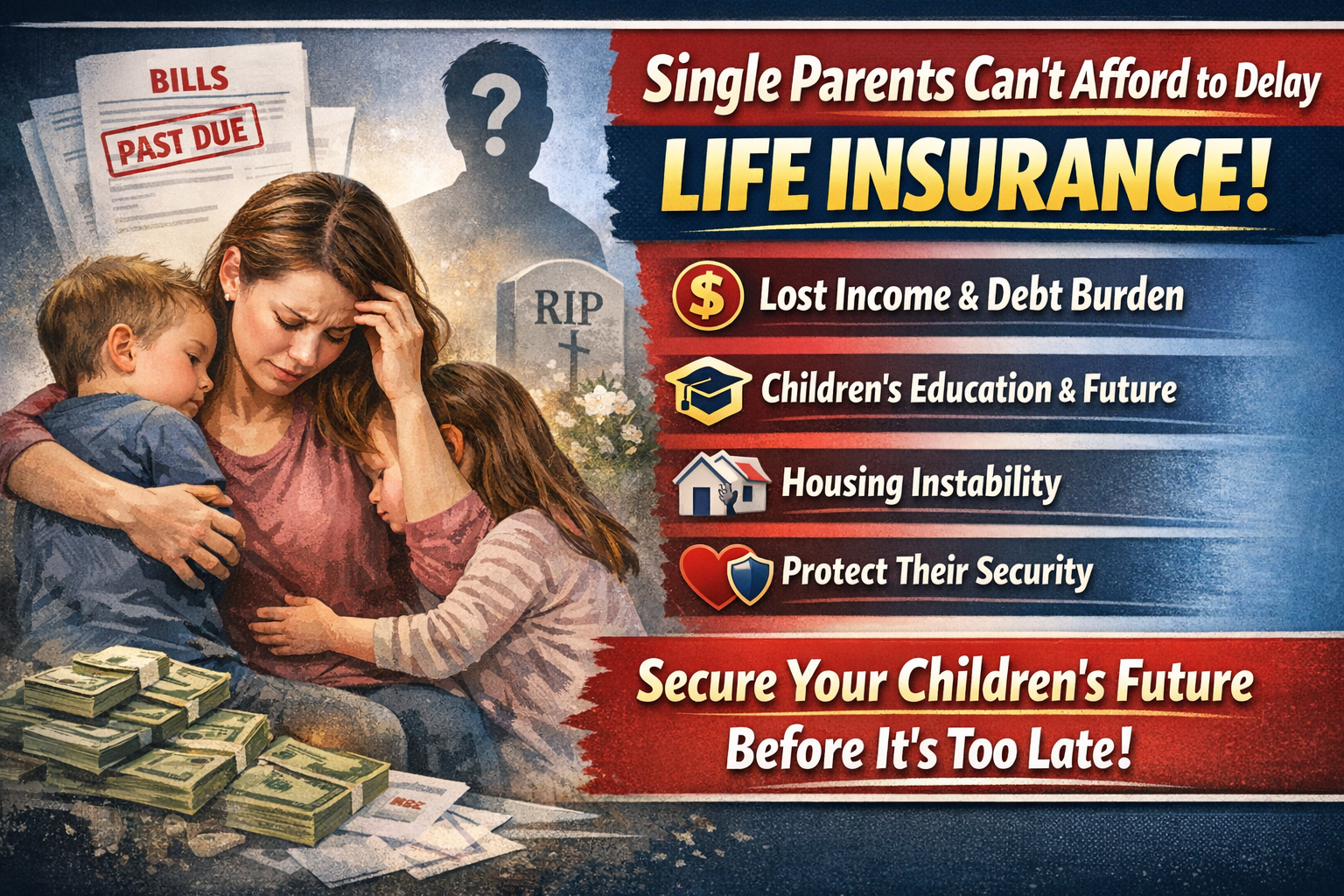
Raising children alone is one of life’s greatest responsibilities. Single parents in the US face unique challenges — financial, emotional, and logistical.
Yet, many single parents make a critical mistake:
- They assume life insurance isn’t essential because they’re focused on day-to-day survival.
- Unexpected illness or death can leave children financially vulnerable.
- Life insurance is more than a financial tool — it’s the ultimate safeguard for your children’s future.
In 2026, single parents cannot afford to overlook life insurance — it ensures your children’s stability, education, and emotional security.
Why Single Parents Are at Higher Risk
Single parents face several challenges that make life insurance crucial:
1️⃣ Income Dependence on One Parent
- One income supports the entire household, including rent/mortgage, food, and school expenses.
- The sudden loss of a single parent can create severe financial disruption.
2️⃣ High Debt Burden
- Mortgages, student loans, car payments, and credit cards are common.
- Without life insurance, surviving children may face unpaid debts or housing instability.
3️⃣ Long-Term Planning Gaps
- Many single parents focus on immediate needs, neglecting long-term planning like college tuition and retirement savings.
4️⃣ Emotional and Practical Stress
- Planning for worst-case scenarios is emotionally difficult, but necessary for family protection.
Step 1: Determine Life Insurance Coverage Needs
Life insurance for single parents should cover:
1️⃣ Income Replacement – Ensure children’s daily needs and lifestyle are maintained
2️⃣ Debt Coverage – Mortgage, credit cards, student loans, and car payments
3️⃣ Future Expenses – Education, extracurricular activities, healthcare, childcare
4️⃣ Final Expenses – Funeral, medical bills, and legal costs
Example:
- Annual income: $55,000
- Mortgage: $200,000
- Car loans: $15,000
- Credit card debt: $10,000
- Children’s future education: $80,000
Recommended coverage: $700,000–$850,000
Step 2: Choose the Right Policy Type
Term Life Insurance
- Affordable and ideal for single parents
- Covers debts, income replacement, and children’s future expenses
- Term: 20–30 years depending on children’s ages
Example: 35-year-old single parent, $500,000, 20-year term → ~$40–$50/month
Whole Life Insurance
- Permanent coverage
- Builds cash value over time
- Higher premiums: $200–$350/month for $500,000 coverage
- Useful for long-term wealth accumulation and leaving a financial legacy for children
Universal Life Insurance
- Flexible premiums and coverage
- Cash value grows based on interest or market index
- Ideal for adapting coverage as income or family size changes
No Exam / Guaranteed Issue Policies
- Quick approval
- Limited coverage ($10,000–$50,000)
- Useful for single parents with health concerns or immediate coverage needs
Step 3: Add Riders for Extra Protection
Riders help single parents customize policies:
- Waiver of Premium: Stops payments if parent becomes disabled
- Child Rider: Provides coverage for children’s unexpected needs
- Accelerated Death Benefit: Access funds if terminal illness occurs
- Disability Income Rider: Ensures income continues if parent cannot work
Step 4: Plan Strategically
- Start Early: Younger and healthier parents pay lower premiums
- Prioritize Term Policies: Affordable coverage for critical years
- Include Riders: Extra protection for disability, illness, or children
- Review Annually: Update coverage as income, debts, or family circumstances change
Real-Life Scenario: Single Parent Protection
Tina, 36, single mother of two children:
- Annual income: $60,000
- Mortgage: $180,000
- Car loans: $20,000
- Planning future education: $100,000
Tina purchased:
- $500,000 term policy for income replacement
- Added child rider for extra security
Outcome if Tina passes unexpectedly:
- Children’s daily needs and education expenses are covered
- Mortgage and debts are secured
- Family avoids financial disruption and stress
Step 5: Cost Comparison
| Policy Type | Coverage | Monthly Premium | Notes |
|---|---|---|---|
| Term Life | $500,000 | $40–$50 | Affordable, ideal for single parents |
| Whole Life | $500,000 | $200–$350 | Permanent, builds cash value |
| Universal Life | $500,000 | $150–$300 | Flexible, grows cash value |
| Guaranteed Issue | $25,000–$50,000 | $100+ | Quick approval, limited coverage |
Even modest term policies provide critical protection for single-parent families.
Step 6: Common Mistakes Single Parents Make
❌ Delaying coverage until children are older
❌ Assuming savings alone can cover emergencies
❌ Ignoring income replacement needs for children
❌ Overestimating personal emergency funds
❌ Failing to include riders for disability, child coverage, or accelerated benefits
Step 7: Smart Strategies for 2026
1️⃣ Layer Coverage: Term for income replacement, optional permanent for wealth accumulation
2️⃣ Lock in Early: Premiums increase with age or health issues
3️⃣ Use Specialized Brokers: Identify policies suitable for single parents
4️⃣ Include Riders: Child coverage, disability, accelerated benefits
5️⃣ Review Annually: Adjust coverage as debts, income, or family circumstances change
Emotional Perspective: Protecting Your Children
Life insurance is more than financial protection — it’s peace of mind:
- Secures daily living and education for children
- Covers debts and housing costs
- Reduces emotional and financial stress
- Ensures long-term stability for the family
Even modest policies guarantee safety and stability for single-parent households.
Step 8: Advanced Tips for Single Parents
1️⃣ Combine Policies with Financial Planning
- Integrate life insurance with retirement accounts, emergency savings, and college funds
2️⃣ Reevaluate Coverage After Major Milestones
- Career changes, children’s births, or housing purchases require reassessment
3️⃣ Consider Joint Coverage for Co-Parents
- If co-parenting, consider coverage that protects both children and income
4️⃣ Plan for Inflation
- Ensure coverage accounts for rising costs of living and education
5️⃣ Use Life Insurance as a Legacy Tool
- Permanent policies can provide cash value for future emergencies or children’s inheritance
FAQ Section
Q1: Do single parents need life insurance?
Yes — to replace income, cover debts, and secure children’s financial stability.
Q2: How much coverage is sufficient?
Calculate income replacement, debts, children’s future needs, and final expenses.
Q3: Is term life sufficient for single parents?
Yes — term life is affordable and covers the most financially risky years.
Q4: Can riders enhance protection?
Yes — child riders, disability riders, and accelerated benefits enhance coverage.
Q5: Should coverage be updated after income or family changes?
Absolutely — life insurance needs increase with changes in income, debt, or children’s needs.
Real-Life Case Study: Long-Term Impact
Consider Sarah, a 38-year-old single mother:
- Annual income: $65,000
- Mortgage: $200,000
- Student loans: $30,000
She purchased:
- $500,000 term life insurance
- Child rider coverage for her two children
After 5 years:
- Policy provided peace of mind and financial security
- Coverage was adjusted as children grew and expenses increased
- She avoided debt accumulation and protected children’s education
Final Hidden Truth: Single Parents Can’t Afford to Delay
In 2026, life insurance is essential for single parents:
✔ Covers income replacement and debts
✔ Secures housing and daily needs
✔ Protects children’s future education and lifestyle
✔ Provides emotional peace of mind
The hidden reality most single parents overlook: early coverage guarantees long-term financial stability, security, and peace of mind for your children.